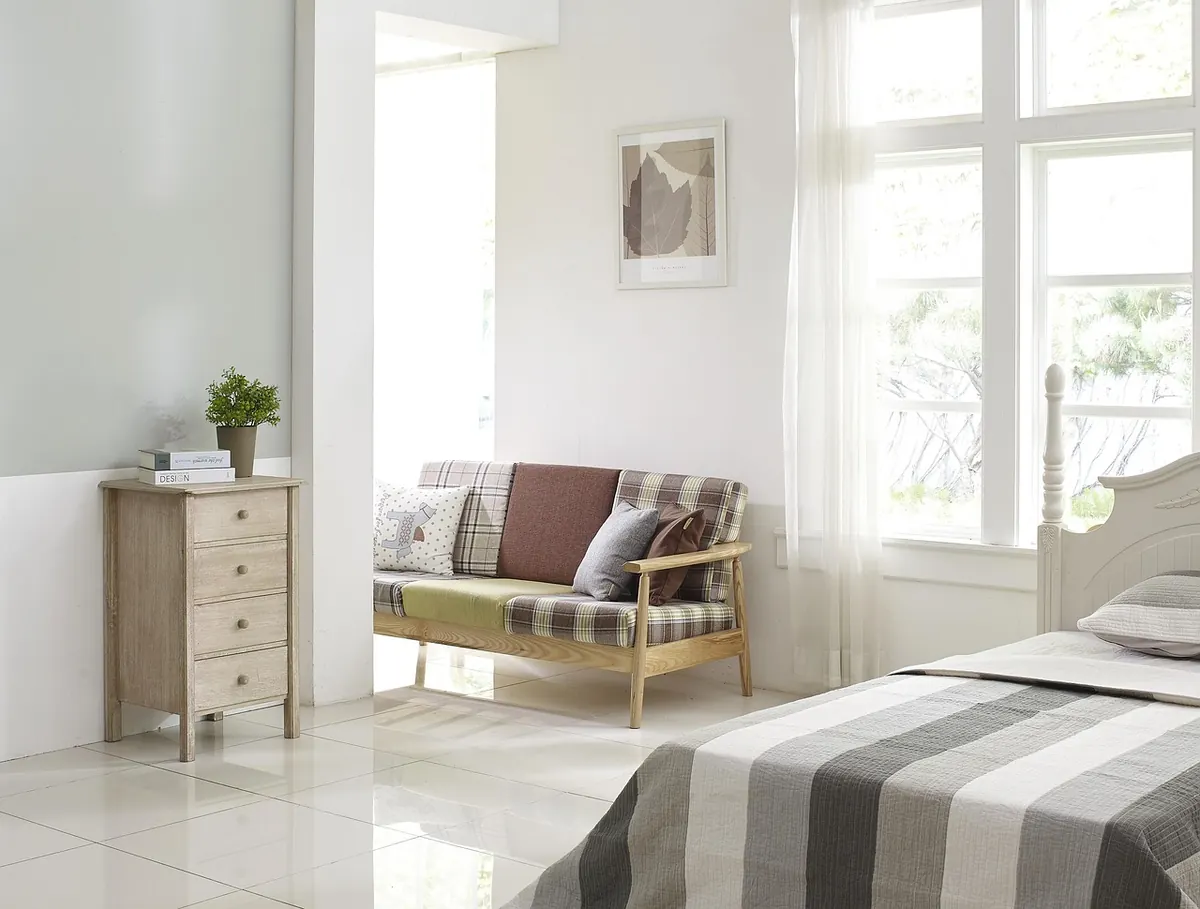
A north-facing living room has a reputation for being chilly, even when the heating is on. The light is soft and indirect, which can make walls look grey, corners disappear into shadow and colours seem flatter than they did in the shop. The good news is that this kind of light is also gentle and consistent, and it responds beautifully to a few deliberate choices. With warmer bulbs, reflective surfaces and a paint palette that works with cool light rather than against it, you can turn a dim room into a calm, welcoming space.
Start by understanding the light you have
North light is cool and indirect. It has no direct sun, so shadows are soft and colours can look slightly grey or blue. In winter, it can feel dim all day; in summer, it may be brighter but still gentle. Spend a day noticing where the light falls. Does it reach the back of the room? Which corners stay dark? That tells you where to put lamps and mirrors.
It also helps to keep window glass clean, trim any heavy outside foliage if you can, and swap thick blinds for something lighter. You still need privacy, but a sheer roller blind or voile curtain will let more daylight in than a heavy Roman blind.
Build a warm, layered lighting scheme
One ceiling light is the quickest way to make a north-facing room feel flat. Instead, think in layers. You want ambient light for the whole room, task light for reading or working, and accent light to add depth.
- Ambient: a ceiling pendant or flush mount with a diffused shade, ideally on a dimmer.
- Task: a floor lamp beside a reading chair, a table lamp on a side table, or wall lights beside the sofa.
- Accent: a small lamp on a shelf, a picture light above art, or an uplighter in a dark corner.
Use warm white bulbs between 2700K and 3000K. Cool white bulbs, often 4000K and above, will make the room feel clinical and emphasise the blue cast in the light. Choose dimmable bulbs where possible and add a dimmer switch or smart plug. A high colour rendering index (CRI) helps skin tones and fabrics look natural. Position lamps so they light the walls as well as the space below. Uplighters in corners can wash the ceiling with warmth, which makes the room feel taller and brighter.
Choose paint colours that flatter north light
North light exaggerates cool undertones. Cool whites, blue-greys and icy pastels can look shadowy, so lean towards warm shades instead. Warm whites, creams, oatmeal, soft stone and pale sand are reliable choices. If you want colour, consider soft pink, peach, earthy yellow or an olive green with a yellow base.
Test samples on at least two walls. Paint large patches and look at them in the morning, at midday, in the evening, and with the lamps on. What looks creamy in a south-facing room can turn grey in a north-facing one.
Use matt emulsion for walls to diffuse light, and satin or eggshell for woodwork. Keep the ceiling a warm white or paint it the same colour as the walls to avoid a cold line where they meet. If you love grey, choose a greige with a warm base rather than a blue-grey. Darker colours can add depth in a snug or on a chimney breast, but avoid cold charcoal in a room that already lacks light.
Use mirrors and reflective surfaces to bounce light
A mirror cannot create light, but it can move it around. Place a large mirror on a wall perpendicular to the window, so it catches daylight and throws it across the room. A mirror directly opposite the window will reflect the sky, which can look flat and grey on cloudy days. If your view is green or has interesting texture, it can work; otherwise, angle it or move it.
Consider a leaner mirror over a sideboard, a pair of mirrors flanking a sofa, or a small round mirror above a lamp to double the glow. Other reflective surfaces help too: a glass table, a metallic lamp base, a brass picture frame, a lacquered tray or a gloss ceramic vase. Keep them clean, as smudges show quickly. A satin finish on woodwork and a low-sheen ceiling paint can also bounce light without creating glare.
Layer in warm textures and furniture
Cool light needs tactile warmth. Wool, velvet, boucle, linen and sheepskin all soften the room. Wood tones such as oak, ash and walnut add natural colour, while brass, copper and antique gold bring a gentle glow. A wool rug in a warm pattern will ground the space and make it feel cosier underfoot.
For curtains, use a sheer voile layer plus lined curtains in a warm neutral. Avoid heavy dark curtains that block the little light you have. If your sofa is dark, add warm throws and cushions. Light wood flooring or a warm carpet will also help. A pale room with no texture can feel cold; a wooden coffee table and a textured throw add life.
Add finishing touches that lift the room
Accessories can carry warmth into every corner. Plants such as snake plant, ZZ plant and pothos tolerate lower light and add a fresh green note. Art with warm colours and light frames works better than dark, heavy pieces. Cushions, books, a ceramic vase or a woven basket all add interest without blocking light.
Candles are lovely in the evening, but never leave them unattended. Choose linen or woven lampshades rather than metal ones, as they diffuse the bulb softly. Keep surfaces reasonably clear so light can reflect off them. A clutter-free room will always feel brighter than a crowded one.
A practical plan for a brighter north-facing living room
You do not need to renovate. Work through these steps over a weekend or a few evenings:
- Clean the windows and replace heavy blinds with sheer or light-filtering options.
- Swap bulbs to warm white 2700K–3000K and add dimmers to the ceiling light and lamps.
- Add at least three light sources: a ceiling light, a floor lamp and a table lamp, at different heights.
- Paint large test patches in warm whites, creams or soft pinks before committing.
- Hang a mirror on a wall perpendicular to the window, and add one or two reflective accessories.
- Layer warm textiles: a wool rug, velvet cushions and linen curtains.
- At night, turn off the main light and see how the room feels with lamps only. Adjust as needed.
None of this has to happen at once. Start with the bulbs and a mirror, then live with the room for a week. North-facing rooms can be some of the most restful in a home. With warm light and a few reflective touches, they become inviting rather than dim.
Photo: manbob86 / Pixabay